The region
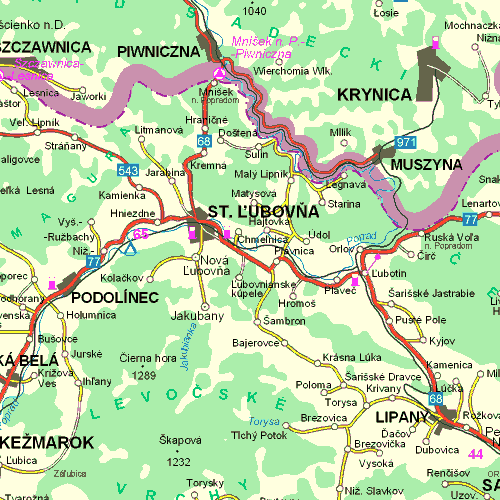
of Stará Ľubovňa is a pictoresque area, which is located in the
north-eastern part of eastern Slovakia. It borders with the
regions of Kežmarok, Bardejov and Sabinov. On the northern part the region is bordered
by a 75 km international border with Poland. The earliest written evidence concerning the
regional city of Stará Ľubovňa is from the year 1292. However, no one will
doubt that the city existed much earlier.
The region
of Stará Ľubovňa is a pictoresque area, which is located in the
north-eastern part of eastern Slovakia. It borders with the
regions of Kežmarok, Bardejov and Sabinov. On the northern part the region is bordered
by a 75 km international border with Poland. The earliest written evidence concerning the
regional city of Stará Ľubovňa is from the year 1292. However, no one will
doubt that the city existed much earlier.
After the
castle of Ľubovňa was built, the small village was transformed into a
"castle village", which enhanced its status. The year 1364 was an important year for the
city's development. In this year the king Ľudovít I, gave the city two important
privileges. The first privilege was that the city was given the status of a royal city, a
privilege which was also found in cities such as Košice and Budín. The second
privilege was that the city was permitted to entertain yearly markets. This second privilege
was granted on the 13th October 1364. Another important factor in the region's development
was that the city was transferred to the ownership of the Polish king. This situation
prevailed from 1412 to 1772. The city became an important cultural and industrial centre.
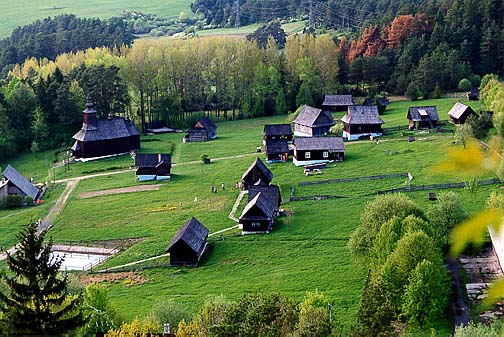
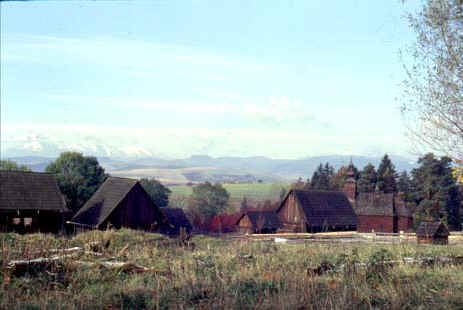
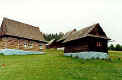
We propose you to visit skanzem - open air museum and
(if will be wishes and time) the castle.
Skanzem-Open Air Museum
The open air museum was opened in 1985 under Ľubovňa
Castle, a site where a
settlement existed in 18th century. It now has twenty-five exhibits. The most significant
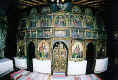
object of the museum is a wooden Greek Catholic church
from Matysová, built in 1833 and consecrated to St. Michael the Archangel.
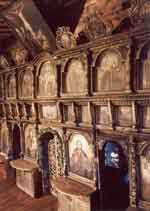
The interior of the chapel is Eastern Rite,
with an iconostasis, or icon screen, separating the sanctuary. This is built in the
Baroque-Classical style, displaying the icons on three levels. The church was taken apart
at the original site and then carefully re-assembled here in Stará
Ľubovňa Museum in 1970. Since its re-consecration in 1990, on an important Church
holy days, Eastern Rite masses have been held here. In front of the entrance to the church
is a cross with carved relief including symbols of martyrdom; it is a copy dating from 1912.
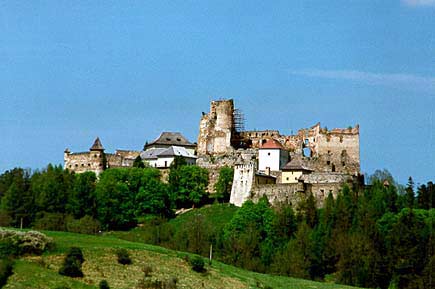
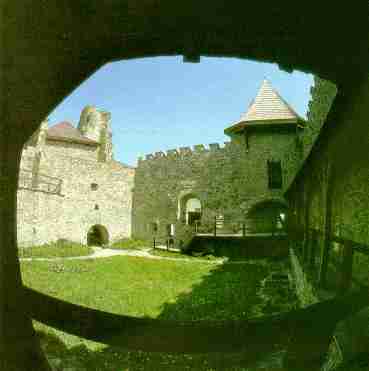
Castle Stará Ľubovňa
Castle Stará Ľubovňa together with castles
Plaveč
and Niedzica on the
eastern side and Orava castle on the western side of the High
Tatra mountains belongs to a complex of fortresses, that once protected the borders of
former Hungary with Poland.